

Procurement Optimization in Motor Insurance

Five Platforms, Zero Transparency
When a vehicle is declared a total economic loss, the wreck is sold through specialized salvage platforms. In Germany, there are five relevant salvage exchanges — each with different strengths for different vehicle types.
In practice, the industry ignores these differences. Many insurers work with a single platform — out of habit or lack of data. For every third vehicle, a significant amount is left on the table because a higher bid would have been achieved on a different platform.
Our client, a leading service provider in motor claims management, processed hundreds of thousands of vehicle appraisals annually for numerous insurers and had access to all five platforms. The data was there — what was missing was the ability to use it.
The question to PLAN D: can this data be turned into a system that identifies the economically optimal platform for each individual vehicle?
Heading
Lorem ipsum dolor sit amet, consectetur adipiscing elit, sed do eiusmod tempor incididunt ut labore et dolore magna aliqua. Ut enim ad minim veniam, quis nostrud exercitation ullamco laboris nisi ut aliquip ex ea commodo consequat.
From Data Silos to Intelligent Routing
Data integration and exploratory analysis
886,000 vehicle appraisals and 332,000 bid records from two separate systems had to be merged first. PLAN D then analyzed the bidding behavior across all five platforms along relevant vehicle characteristics. The finding was clear: each platform has measurably different strengths. Patterns that no human could detect manually — but that become measurable across hundreds of thousands of records.
Model development
Based on these patterns, PLAN D developed a machine learning model that predicts, for each individual vehicle, which platform is expected to yield the highest bid. It learns from vehicle class, manufacturer, value, damage type, age, and mileage — and assigns the platforms that deliver the best results for that exact profile. Transparent and explainable, so the recommendation holds up in day-to-day operations.
Intelligent routing
The model outputs a probability per vehicle and platform for achieving the highest bid. When prediction confidence is high, the best platforms are targeted. When uncertain, the full range is used. The principle: secure the highest bid where the AI is confident. Hedge the risk where it is not.

"Depending on the size of the insurer, the added value can reach six or even seven figures annually."
Millions in Savings. Measurable. Reproducible.
Extrapolated across all insurers our client serves in claims management, AI-driven platform selection yields savings potential of around 50 million euros per year. Not as a theoretical value, but calculated on the basis of real bid data from 886,000 appraisals.
For our client, this is more than a one-time result: data-driven procurement optimization instead of gut feeling. An approach that becomes more precise with every new dataset — and gains relevance as the market grows.
Zahlen & Fakten
~50 Mio. €
Every 3rd
886.000
5
So haben wir es umgesetzt
Machine Learning
Data Pipelines
Decision Trees

Prädiktive Modellierung

Datenvisualisierung
Anomaliedetektion
FAQs
Procurement optimization in motor insurance describes the systematic improvement of purchasing decisions in the claims process. For total economic losses, the core question is: which salvage platform should the accident vehicle be sold through to achieve the highest return?
In Germany, there are several specialized salvage exchanges, each with its own customer base. Each platform has strengths for certain vehicle types. Choosing the right platform for the right vehicle yields measurably higher returns. AI-driven procurement optimization makes this selection data-based — instead of relying on habit or individual contracts.
A machine learning model analyzes historical bid data from all relevant salvage platforms. Based on vehicle characteristics such as class, manufacturer, age, mileage, and replacement value, the model predicts which platform will yield the highest bid for a specific vehicle.
In practice, this means: instead of defaulting to a single platform, each vehicle is assessed individually. When prediction confidence is high, the best platforms are targeted. When uncertain, the full range is used. The result is intelligent routing that minimizes costs and maximizes returns.
The reasons are historical: existing contracts, established processes, lack of comparative data. Many market participants simply have no systematic overview of which platform delivers the best results for which vehicle type.
On top of that: the differences between platforms are not obvious. Only an analysis of hundreds of thousands of bid records reveals the patterns — on certain platforms, higher bids are placed for SUVs, on others for older vehicles, on yet others for specific manufacturers. Without data analysis, these differences remain invisible.
Two core datasets: vehicle appraisal data (vehicle class, manufacturer, replacement value, age, mileage, engine power, damage type) and historical bid data from salvage platforms (bid amount, platform, accepted bid). This data typically already exists within insurers but is rarely analyzed systematically.
The real work lies in integration: appraisal databases and bid databases are often separate systems with different formats. Merging and cleaning these data silos is a prerequisite for any analysis.
The model is accurate enough that, on average across all vehicles, it demonstrably achieves higher returns than any blanket platform assignment. It operates efficiently even with large data volumes and delivers interpretable results.
What matters in practice: the model doesn't just deliver a prediction, but also a confidence score. At high confidence, it routes precisely. At lower confidence, it recommends broader distribution across multiple platforms.
The benchmark is competitors that use only a single salvage platform. Systematically selecting the economically best platform for every vehicle disposal yields higher residual values per vehicle on average.
Across hundreds of thousands of claims per year, this difference adds up to around 50 million euros annually. The calculation is based on real bid data and a comparison between actually achieved returns and a simulation where only the most commonly used single platform would have been used.
The core principle — data-driven optimization of vendor selection — is applicable across industries. Wherever companies regularly choose between multiple service providers, suppliers, or platforms, a similar approach can be implemented.
The prerequisite is a sufficient data foundation of historical transactions. The more decisions are documented, the more precisely a model can identify patterns and derive recommendations. The automotive sector is particularly well-suited because data volumes are large and features are well-structured.
When a vehicle is declared a total economic loss — when repair costs exceed the vehicle's replacement value — the vehicle is auctioned through specialized salvage exchanges. Buyers are typically commercial purchasers, workshops, and recyclers.
The residual values achieved directly impact the insurer's claims costs: the higher the residual value, the lower the compensation to the policyholder, the lower the loss ratio. Platform selection is therefore a business-critical decision — one that has rarely been made systematically until now.
Mehr KI-Projekte aus der Praxis
700 Members, One AI
700+

Digital Strategy for 1.2 Million Members
100%

360° Customer View for Sales
2x
From AI Hesitation to an AI Roadmap
2

Price Prediction in Seconds
24h → 1 Sec.
Repair Costs in Seconds
93%
Data Strategy Instead of Data Silos
6 Months
50 Million Euros Through Data
~50 Mio. €


Expert Knowledge at the Touch of a Button
100


A Digital Future for the Energy Transition
7

AI Calculates Hail Damage
40.000+
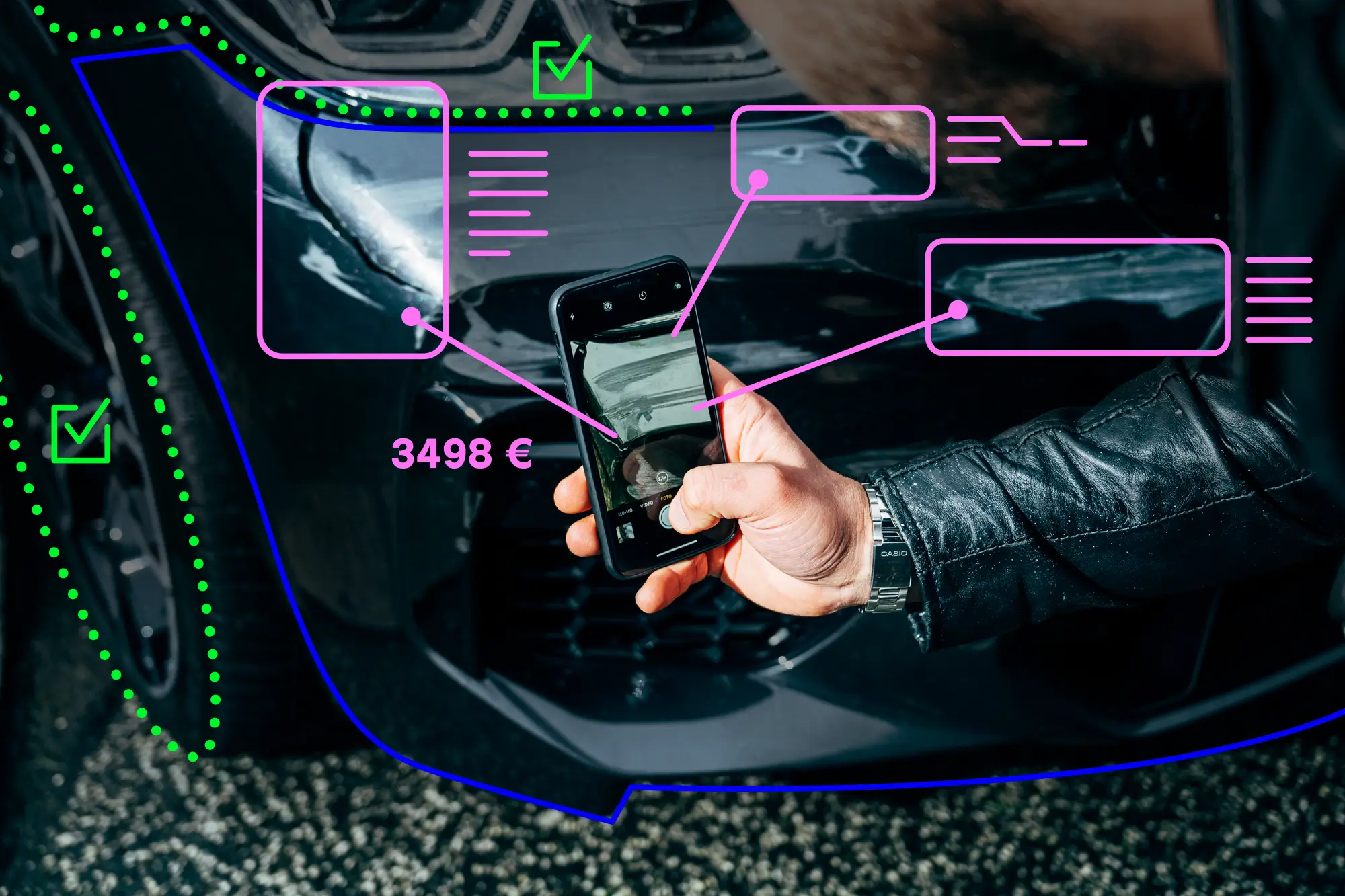
Computer Vision in Claims Management
93 %


Mit Daten Leben retten
1,3 Stunden


Remote Videobesichtigung von Kfz Schäden
100.000 Euro

Omnikanal im Versicherungsvertrieb






















Bereit wenn Sie es sind
Zukunft beginnt, wenn menschliche Intelligenz künstliche Intelligenz entwickelt. Der erste Schritt ist nur ein Klick.
Zukunft beginnt, wenn menschliche Intelligenz künstliche Intelligenz entwickelt. Der erste Schritt ist nur ein Klick.


KI Beratung
KI Entwicklung
KI Operations
Formate
Unternehmen
Rechtlichtes


