Wo KI echten Nutzen schafft
Alle Use Cases

Intelligent Service Ticketing
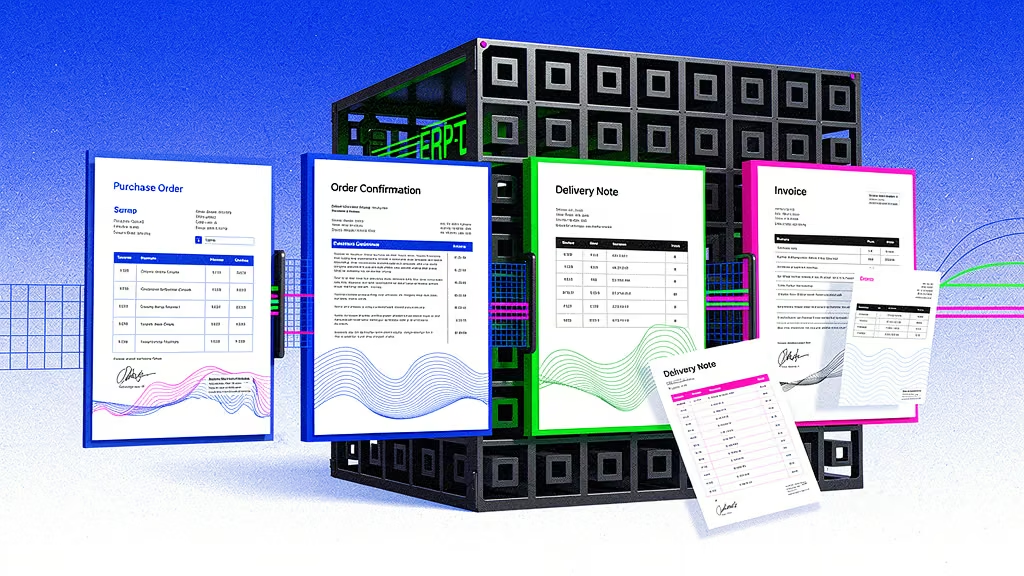

Intelligent Knowledge Search

Intelligent Master Data Validation
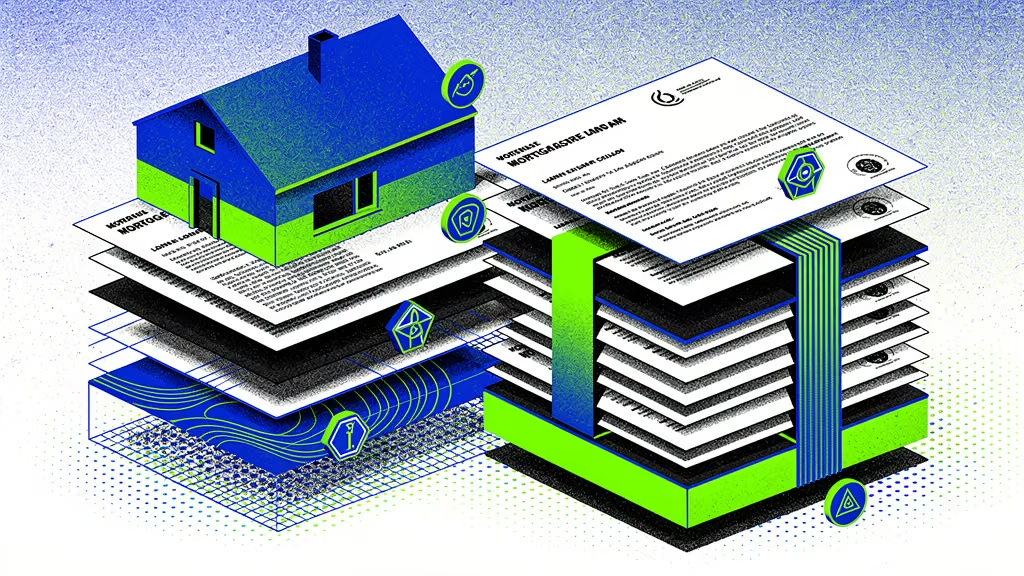
Optimise Lending Intelligently
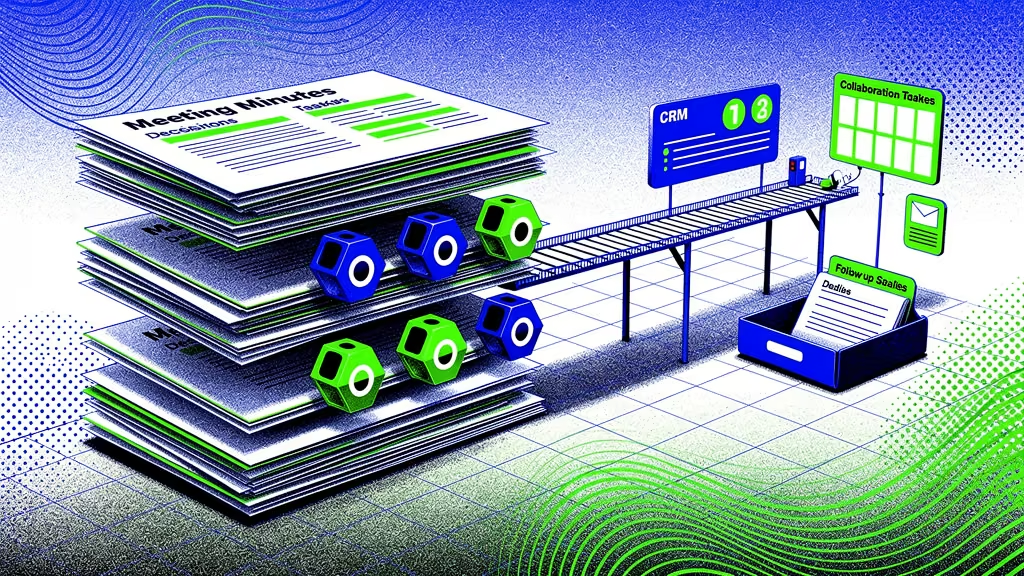
Sales Meeting Notes

Churn Analysis and Customer Reactivation
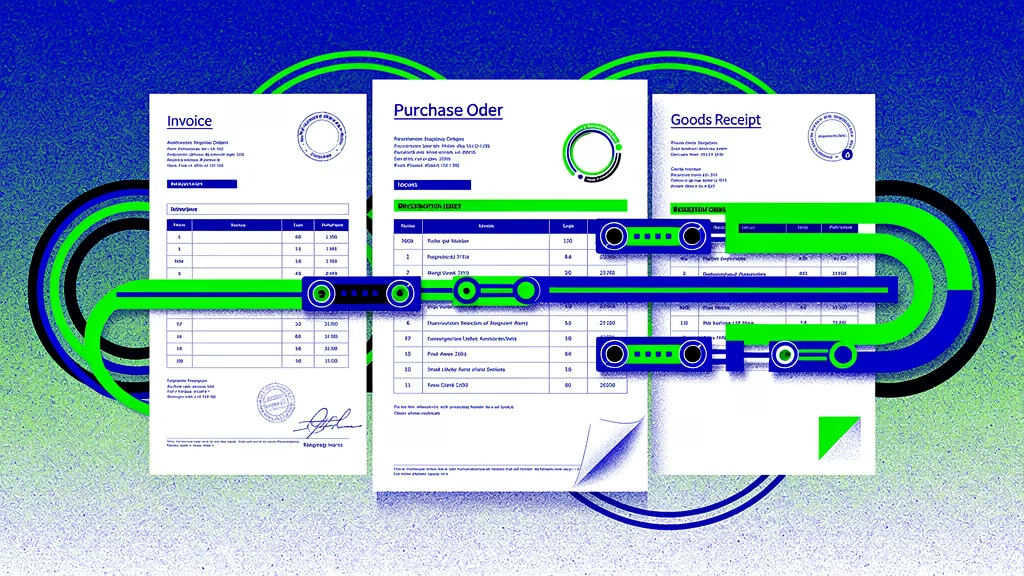
Automated Invoice Checking

Utility Bills Analysed Intelligently

Draft Statements Faster
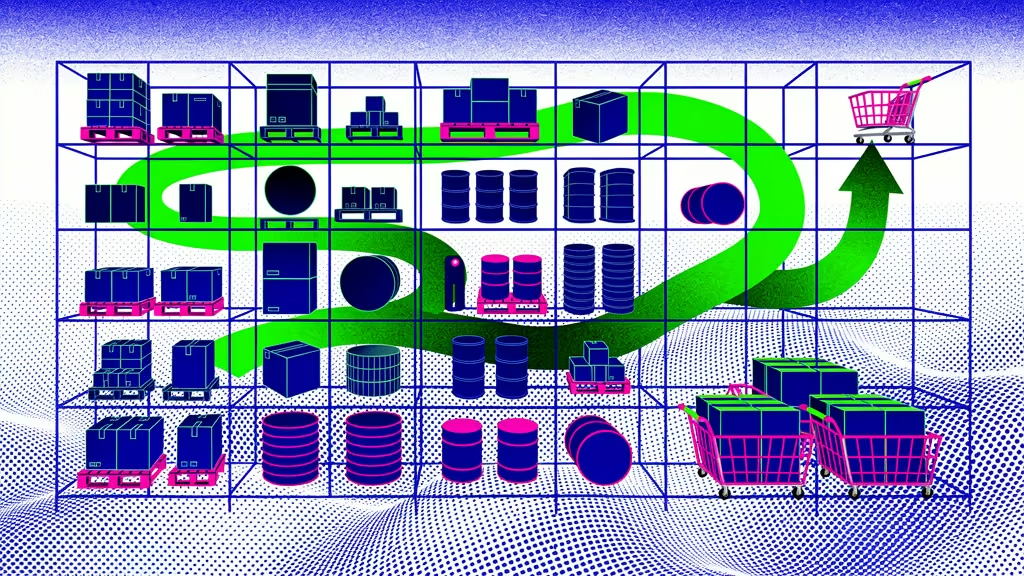
Intelligent Demand Planning
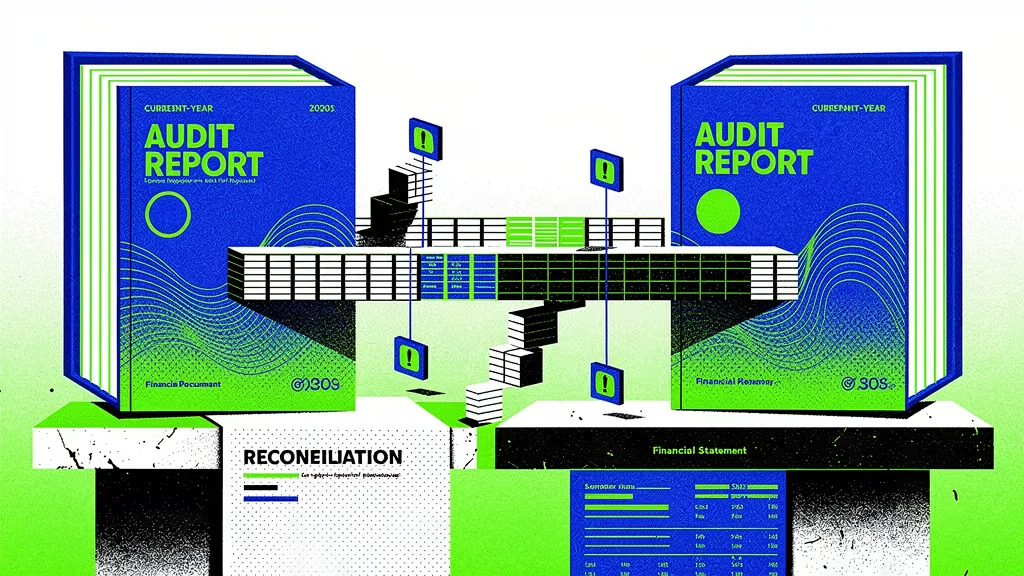
Automated Audit Report Review
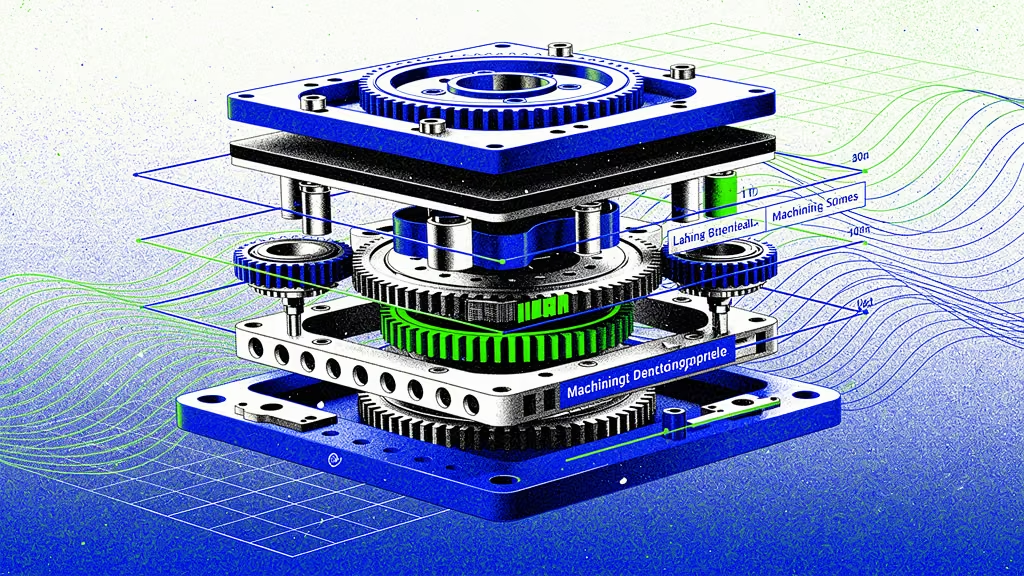
Precision Production Planning

Automate Complaint Management

Intelligent Workforce Scheduling

More Accurate Project Planning
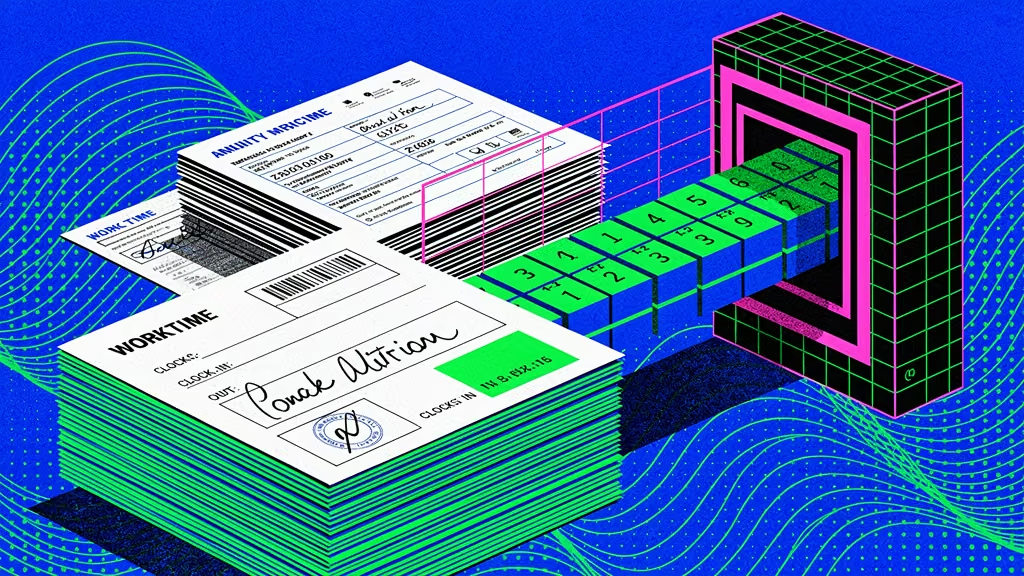
Automate Timesheet Processing

Accurate Call Centre Staffing

Predictive Maintenance

Automated Talent Management
FAQs
An AI use case is a specific application where artificial intelligence solves a defined business problem or delivers a measurable improvement. It describes where AI is deployed, which problem it addresses, and what value it creates.
A good use case is not a technology experiment. It has a clear starting point — a challenge that has been manual, time-consuming, or error-prone — and a measurable goal: faster, cheaper, more reliable, more scalable. Only when both come together does the effort for data, development, and integration pay off.
The right use case doesn't emerge on a whiteboard — it comes from engaging with real processes and data. The starting point is always the question: Where does our company lose time, money, or quality today — and where are the biggest levers?
In practice, four criteria help:
Business relevance: How significant is the value if the problem is solved? A use case that produces only marginal effects rarely justifies the effort.
Technical feasibility: Is data available, are interfaces accessible, is the problem algorithmically solvable? Not every challenge can be addressed with AI — and that's not a weakness, it's honesty.
Strategic fit: Does the use case solve a problem that matters to the company's strategy? AI projects that miss the core business rarely generate the support they need for successful implementation.
Operational viability: Who uses the solution? Who maintains it? Which processes need to change? A use case that works technically but isn't supported organizationally remains a prototype.
A use case describes the what and why: which problem is solved, how AI helps, and what value is created. It's the foundation for a solution — not a finished system.
An AI product is the implementation: developed, integrated, tested, and running in production. The path from use case to product involves data analysis, model selection, development, integration into existing systems, and ongoing operations.
At PLAN D, we support both — from identifying viable use cases to delivering production-ready AI solutions. Because a use case only has value when it works in everyday operations.
The greatest potential lies where high business value meets repeatability — in tasks that occur regularly and where each cycle consumes time, money, or scarce resources. Typical examples: decision-making, review, assessment, forecasting, or planning processes that are still handled manually.
A key factor is the digital environment. AI is far easier to deploy when data is available, processes are digitally mapped, and interfaces exist. In environments without a digital foundation, these prerequisites must be established first.
Less viable are use cases with low repetition rates and low individual value. The effort for data, integration, and operations often doesn't justify the benefit.
With numbers, not slides. An AI use case needs clear answers to three questions: What problem does it solve? What does the problem cost today? And what changes when AI is deployed?
Decision-makers don't want technology demos — they want business arguments. A solid business case shows the expected benefit — such as reduced processing times, lower error rates, or relieved teams — and weighs it against the effort for implementation and operations.
A clear implementation plan also helps: What happens in the first weeks? When are initial results visible? And how do you limit risk? Formats like an AI pilot or a 100-day MVP make exactly that tangible — tests with manageable investment and measurable results.
Traditional IT projects implement defined rules in software. What goes in and what comes out is known in advance. AI projects work differently: they learn from data, make predictions, and improve over time. The result isn't fixed on a blueprint — it emerges through training, validation, and iteration.
This has consequences for implementation. AI projects require different planning: more exploratory at the start, data-driven at the core, iterative in progress. Data quality determines solution quality. And operations don't end at go-live — they begin there, with monitoring, retraining, and continuous improvement.
At the same time, an AI use case remains a software project. Architecture, integration, operations, security, and quality assurance all still apply. AI doesn't replace good software engineering practice — it adds to it.
The bar is lower than many expect. What matters isn't how far along a company is in its digital transformation, but whether the basic prerequisites for a specific use case are in place.
Most use cases require: available data in usable form, clear processes or decisions to be addressed, access to the relevant systems, and the willingness to adapt workflows when AI opens new possibilities.
For companies with limited digital infrastructure, simple, well-defined entry projects are a good fit. For organizations with high data availability and an established IT foundation, more complex use cases are possible from the start.
That depends on complexity, data availability, and integration. As a guide:
- Based on our AI platform Galilea, initial use cases can be up and running within days.
- Custom-built pilots — technically functional and evaluable — are typically achievable within a few weeks.
- A production-ready solution with full integration is often completed in a 3-month sprint, for example through our 100-Day MVP format.
- Complex systems with deep process integration, high scalability requirements, or regulatory demands require correspondingly more time.
Costs depend on scope, technology stack, and complexity. We offer workshops, fixed project packages, retainers, and custom solutions — for different budgets and maturity levels. The most affordable entry point starts at €30 per month for a user license of our AI platform Galilea.















Bereit wenn Sie es sind
Zukunft beginnt, wenn menschliche Intelligenz künstliche Intelligenz entwickelt. Der erste Schritt ist nur ein Klick.
Zukunft beginnt, wenn menschliche Intelligenz künstliche Intelligenz entwickelt. Der erste Schritt ist nur ein Klick.


